
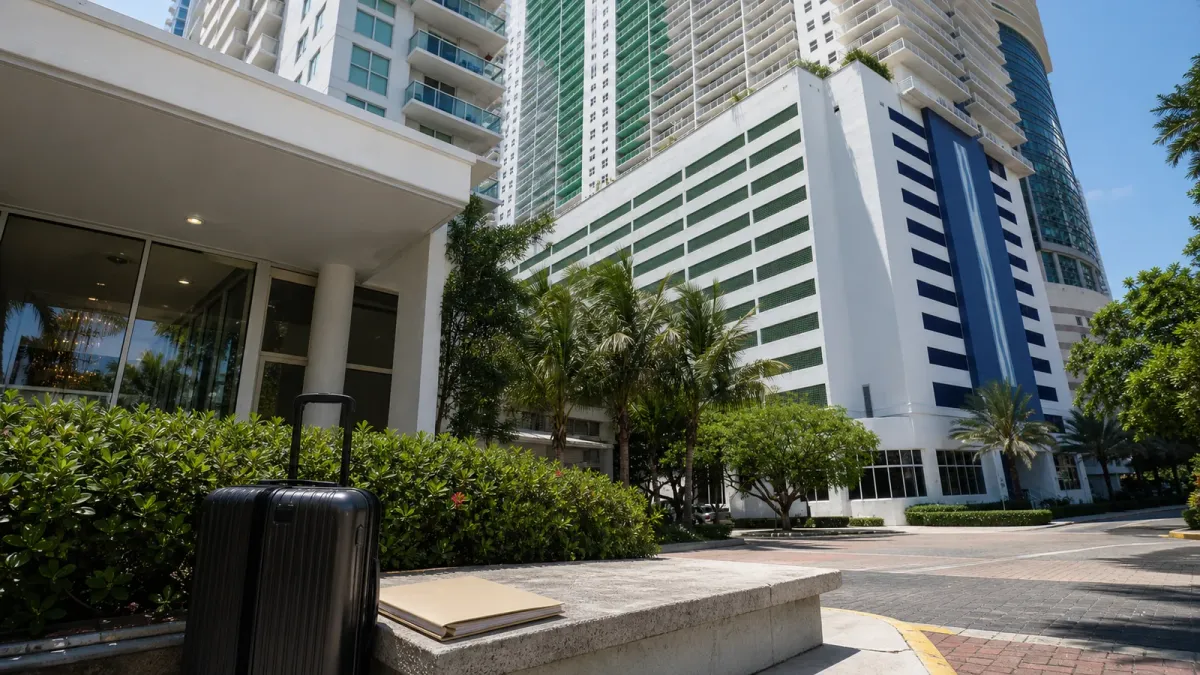
A canceled City of Miami inspection at The Club at Brickell Bay has put Brickell's short-term-rental fight back in front of Miami residents, condo boards and buyers trying to understand where vacation rentals can operate legally.
The immediate issue is access. Tampa Bay Times/Miami Herald reporting published July 28 said homeowners expected city code compliance inspectors to gather evidence of possible building-code and short-term-rental violations, but the visit was canceled after inspectors said they needed open access to units or risked trespassing on private property.
The practical consequence is larger than one tower: residents say enforcement can stall even when a building has hundreds of units advertised for short stays, while hosts and buyers still have to navigate city, county, state and condo-association rules before treating a residential unit like lodging. For anyone buying in Brickell, the story is also a reminder that a profitable nightly-rental listing is not the same thing as a permitted building use.
What changed
The reporting says about 540 of the building's 643 units are listed on short-term-rental booking platforms such as Airbnb and VRBO. It also says the 43-story building at 1200 Brickell Bay Drive does not have the city permit required to operate as a condo-hotel.
Live Airbnb pages reviewed Tuesday still advertised stays inside The Club at Brickell Bay, including a listing that identifies the address as 1200 Brickell Bay Drive and describes guest amenities such as pools, a gym and assigned parking. Another listing tied to the building was also visible in search results, keeping the issue current beyond a single inspection date.
What Miami requires
The City of Miami's short-term-rental/lodging process says operators must keep a current Certificate of Use, renew it annually, comply with City Code Section 31-94 and expect code-enforcement and fire-prevention inspections, including possible unannounced site visits.
The city page also tells residents who suspect illegal short-term-rental activity in a building or neighborhood to contact code compliance. That matters in Brickell because the dispute is not only whether tourists are booking units, but whether the building has the approvals and access needed for inspectors to verify conditions.
Why it matters
For full-time residents, the stakes are quality of life, building security and whether a condo association can keep common areas functioning like a residence rather than a hotel. For owners and investors, the risk is buying into a rental strategy that may depend on city approvals, building classification and association rules that can change or be challenged.
The Club at Brickell Bay has also become a test case for Miami's enforcement capacity. If inspectors cannot enter units without consent or building cooperation, complaints can turn into a paperwork trail rather than a quick enforcement action.
What happens next
The next question is whether Miami code officials reschedule the inspection, find another way to document alleged violations or take action based on records already available. Until then, the clearest advice for Miami condo buyers and hosts is simple: check the building's Certificate of Use, zoning status, state lodging license, business tax receipt and condo documents before relying on short-term rental income.


