
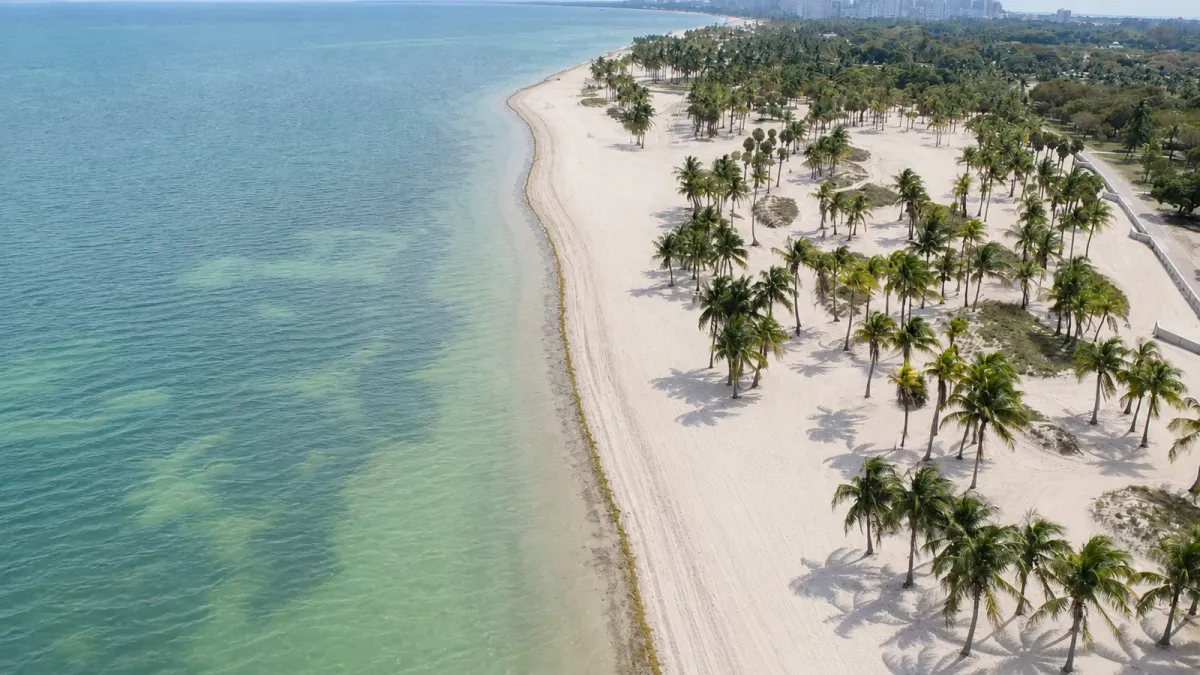
Miami-Dade health officials are advising people to avoid water-related activities at Crandon Park North in Key Biscayne after weekend testing found Enterococcus bacteria above the state guideline for recreational water.
The advisory was reported Sunday, August 30, after Saturday sampling. It applies to contact with the water at Crandon Park North, not to every beach in Miami-Dade County. The beach can remain physically accessible even while officials advise against swimming or other water activities.
The Florida Department of Health in Miami-Dade County said the elevated result creates an increased risk of illness for swimmers. The advisory is expected to remain in place until follow-up testing shows bacteria levels below the accepted health threshold.
Do this first
Choose another swimming location and check the Florida Healthy Beaches results or the Miami-Dade health department’s current notices before returning to the water. Do not assume that clear-looking water means a bacterial advisory has ended; the organisms being measured are not visible from shore.
People who already entered the water do not need to assume they will become sick. They should avoid swallowing the water, wash after exposure and seek medical guidance if concerning symptoms develop, especially for young children, older adults or people with weakened immune systems.
What Enterococcus means
Enterococci are bacteria found in the intestinal tracts of humans and other warm-blooded animals. The U.S. Environmental Protection Agency uses them as an indicator of possible fecal contamination in recreational water.
The bacteria detected by a routine test are not necessarily the organism that would make someone ill. Their presence at elevated levels signals that disease-causing viruses, bacteria or protozoa may also be present. EPA lists possible effects from contaminated recreational water including gastrointestinal, skin, eye, ear and respiratory illnesses.
A high result also does not identify the contamination source by itself. Possible sources can include wastewater, leaking septic systems, runoff, boat sewage and waste from domestic animals or wildlife. Determining the source requires additional investigation.
Check these details
The advisory is specific to Crandon Park North in Key Biscayne. Visitors should verify the exact beach name because Crandon Park includes more than one shoreline area, and water-quality notices can differ by sampling location.
Officials may retest and lift an advisory quickly when results improve, but the end date should not be guessed. The advisory is over only when the health department posts an all-clear based on new samples.
Why the warning matters
Beach advisories are designed to reduce exposure while laboratory results show a higher-than-accepted indicator level. They are precautionary: they do not prove that every person entering the water will become ill, but they identify a measurable risk that is avoidable. A short detour to another monitored beach prevents exposure without requiring anyone to diagnose the contamination source.
For Miami residents and visitors, the practical takeaway is narrow and immediate. Crandon Park North is the affected site, the water is the concern, and the safest choice is to stay out until Miami-Dade health officials report that testing has returned to an acceptable level.


