
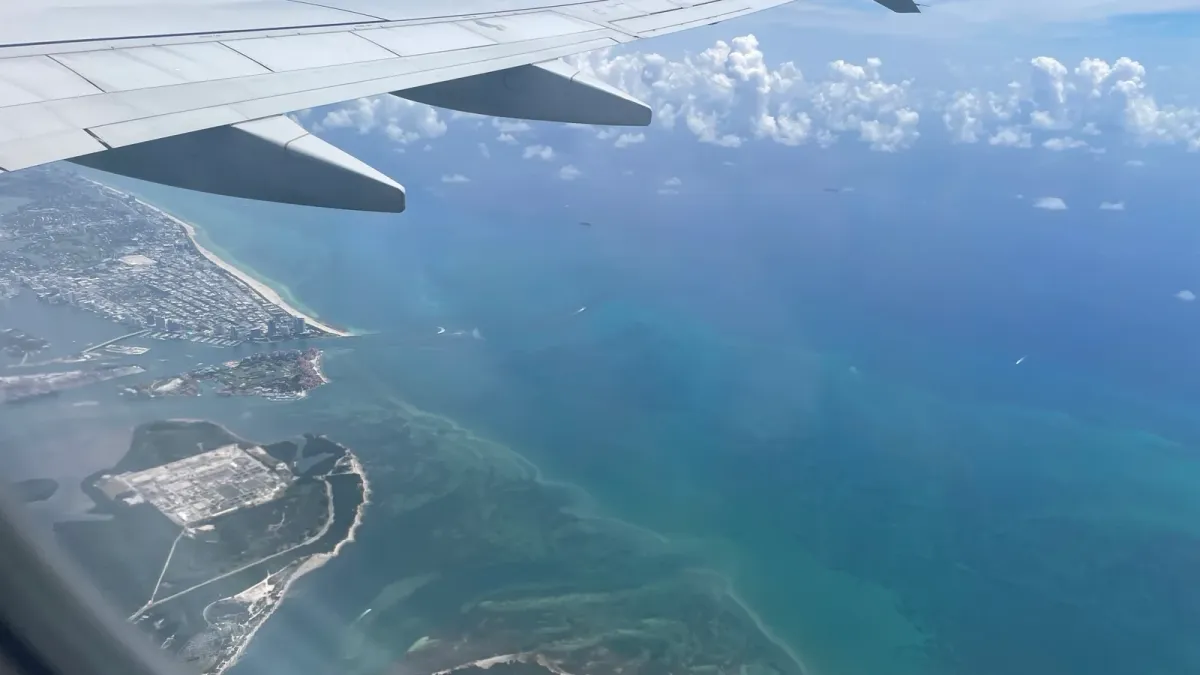
A Miami-Dade judge has rejected an attempt to stop Miami’s November 3 referendum on a long-term lease covering the Rickenbacker and Marine Stadium marinas on Virginia Key. The ruling means City of Miami voters—not all Miami-Dade County voters—are still scheduled to decide whether Virginia Key LLC should receive the waterfront lease.
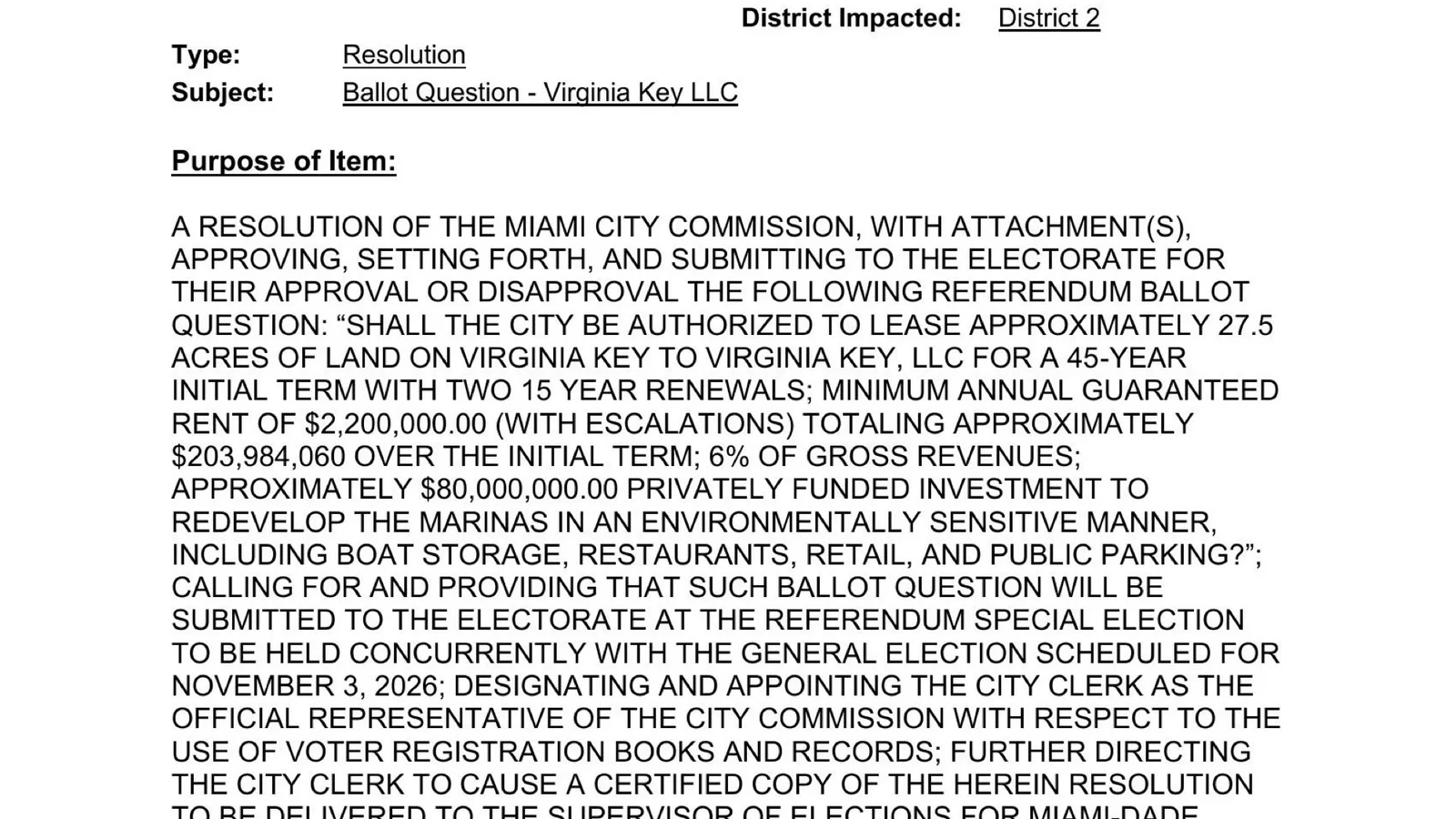
The proposal covers about 27.5 acres and would begin with a 45-year term. It includes two optional 15-year renewals, meaning the arrangement could last as long as 75 years. City ballot materials say the deal guarantees at least $2.2 million in annual rent, with escalations, plus 6% of gross revenue and approximately $80 million in privately funded improvements.
The vote is related geographically to the Miami Marine Stadium, but it is not a repeat of the August 18 stadium referendum. That earlier question concerned a separate 40-year management and restoration agreement for the stadium. The November question concerns the neighboring marina properties, a different private partner and a much longer possible lease.
What the judge decided
Miami-Dade Circuit Judge Lisa Walsh declined to block the referendum in a challenge brought by Rickenbacker Marina Inc., an affiliated operator and Adam Gersten, whose Gramps Getaway restaurant is on the property. Axios reported the decision on August 20, four days after the ruling.
The challengers argued, among other claims, that the ballot language could mislead voters and that the city would not receive fair-market value. Walsh upheld the language at this stage and cited two appraisals obtained by the city that supported its fair-market-value position, according to Axios.
The decision clears an immediate obstacle to the vote, but it does not end the litigation. The lawsuit remains active, with a trial scheduled for September 2027. In practical terms, Miami voters may cast ballots before every claim in the newer case is resolved.
What voters are being asked to approve
The ballot question asks whether Miami may lease the Virginia Key property to Virginia Key LLC for the initial 45-year term and the two possible renewals. It also lists the minimum annual rent, the percentage-rent provision and the private-investment commitment. The city estimates the guaranteed rent would total approximately $203.98 million over the initial term before counting the 6% share of gross revenue.
The proposal envisions redeveloping the Rickenbacker and Marine Stadium marinas with boat storage, restaurants, retail and public parking. Supporters also describe new docks, upgraded restaurant areas and a public baywalk. Those improvements are promises tied to the proposed deal; they should not be treated as completed or fully designed projects.
Why the terms are contested
The central dispute is not simply whether the marinas need work. It is whether a deal rooted in a procurement process that began nearly a decade ago still gives the public an acceptable return and whether the ballot tells voters enough about the tradeoffs.
During the June 11 City Commission meeting, several commissioners questioned whether the older financial terms reflected current values. City Attorney George Wysong told commissioners that prior litigation left the city with little ability to renegotiate before sending the proposal to voters. The Miami Herald and Miami Today reported that the city advanced the question after courts found Virginia Key LLC had been improperly denied the deal despite ranking first in the procurement process.
Opponents, including the current marina operator, say the wording does not adequately communicate the length and value of the arrangement and argue that public waterfront could be locked into outdated terms. Their campaign also raises concerns about existing tenants and future access. Those are advocacy claims, not findings that the deal is unlawful.
Virginia Key LLC’s supporters counter that the company won the public selection process, that the city obtained appraisals supporting fair-market value and that voters deserve the final say. Robert W. Christoph Jr., president of RCI Group, which is part of Virginia Key LLC, described the failed effort to stop the election as an attempt to deny residents that choice.
What the ruling does—and does not—settle
Walsh’s decision keeps the referendum on track. It does not itself approve the lease, resolve the full lawsuit or guarantee that every proposed improvement will be built. Voter approval is still required because Miami’s charter requires citywide approval for leases of city-owned waterfront property.
If the referendum passes, the city would be authorized to proceed with the lease subject to the governing documents and any continuing legal rulings. If it fails, voters will have withheld that authority. The exact ballot language matters because the question asks for a single yes-or-no judgment on a package combining lease duration, rent, revenue sharing and redevelopment.
What Miami voters should watch next
First, watch for the official sample ballot and any explanatory material issued before November 3. Second, compare the base rent and escalation schedule with the city’s appraisals and the complete lease, rather than evaluating the $80 million investment figure in isolation. Third, look for concrete commitments on public access, parking, environmental review and the treatment of current businesses.
The judge’s ruling answers the immediate procedural question: the referendum can go forward. The harder policy question now belongs to Miami voters—whether the promised redevelopment, rent and public amenities justify placing two city-owned marina sites under one private lease that could reach the start of the next century.


