
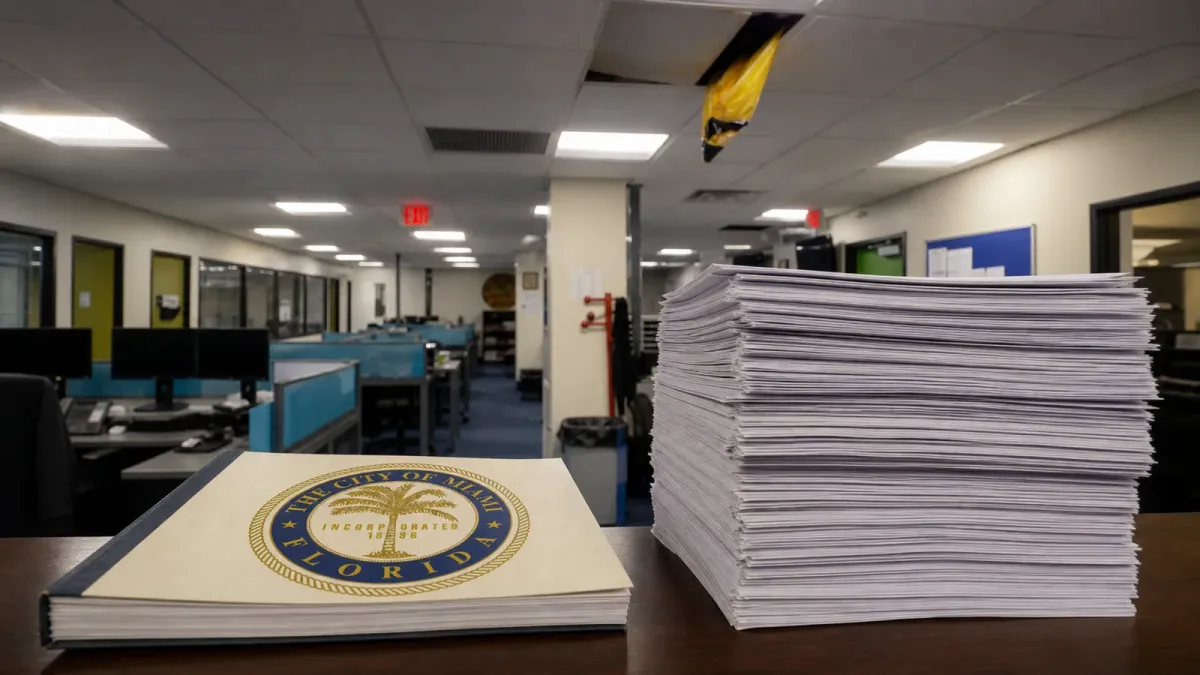
Miami voters are being asked to approve $450 million in property-tax-backed borrowing for police and fire-rescue facilities on November 3, 2026. That is the amount the city would borrow—not the full amount taxpayers could repay.
An internal estimate prepared by City Manager James Reyes put principal, interest and issuance costs at roughly $795 million over the life of the debt, according to questions and written answers obtained by the Coconut Grove Spotlight. The same response said the added personnel needed for new fire stations would be paid from the General Fund, but those costs had not yet been included in the city’s long-range operating forecast.
The City of Miami’s Safe & Ready Miami FAQ calls $450 million the “total bond” and estimates an average household cost of $9.20 a month. It does not display the $795 million repayment estimate or a projected operating-cost total. That omission is the central issue voters should examine before authorizing the debt.
The missing number
Interest is not evidence of wrongdoing. It is the normal cost of borrowing money over time. But a ballot campaign built around a $450 million headline should plainly distinguish the principal from estimated total debt service.
The $795 million figure is not fixed. Interest rates, issuance timing, taxable values and the final financing structure can move it up or down. The city also amended the proposal to direct eligible grants, community-benefit payments and proceeds from a potential sale of existing public-safety property toward reducing bond costs. Those offsets could lower what ultimately must be borrowed or repaid.
That uncertainty is an argument for publishing a transparent financing range, not for omitting one. Voters need to see the assumptions: how many years the bonds would run, the interest-rate range used, the issuance schedule and the expected total debt service under low, middle and high scenarios.
The household estimate has also shifted. The earlier internal response cited by the Spotlight put the average annual payment near $131, while the current campaign site says $9.20 a month, or $110.40 a year. Both use an average property value of $423,020. The city says actual costs will vary, but it does not show a reconciliation explaining why the estimate changed.
Costs that begin after construction
The bond can pay for capital projects; it cannot pay salaries or routine operating expenses. That distinction matters because four proposed new fire stations would need crews, utilities, equipment maintenance and recurring building upkeep after the ribbon-cuttings.
Reyes’s written response acknowledged that additional fire personnel would be needed and said those jobs would come from the General Fund, according to the Spotlight. At the time of that response, the expenses were not in the long-term forecast. The public FAQ still provides no staffing count, annual operating estimate or schedule showing when those costs would hit the budget.
The same applies to the proposed public-safety building at Miami Freedom Park. The city describes a consolidated hub for police headquarters, fire-rescue leadership, emergency operations, real-time operations and 911 coordination, with an estimated project duration of 58 months. Consolidation may create efficiencies, but the public materials do not quantify them or show the new facility’s projected annual operating cost.
The City of Miami’s case is real
The unanswered financial questions do not erase the condition of Miami’s public-safety buildings. The city says the current police headquarters opened in 1976 for about 560 officers and now houses roughly 1,390 sworn personnel plus 400 other employees. Officials cite flooding, roof leaks, plumbing failures, unusable restrooms and outdated electrical systems.
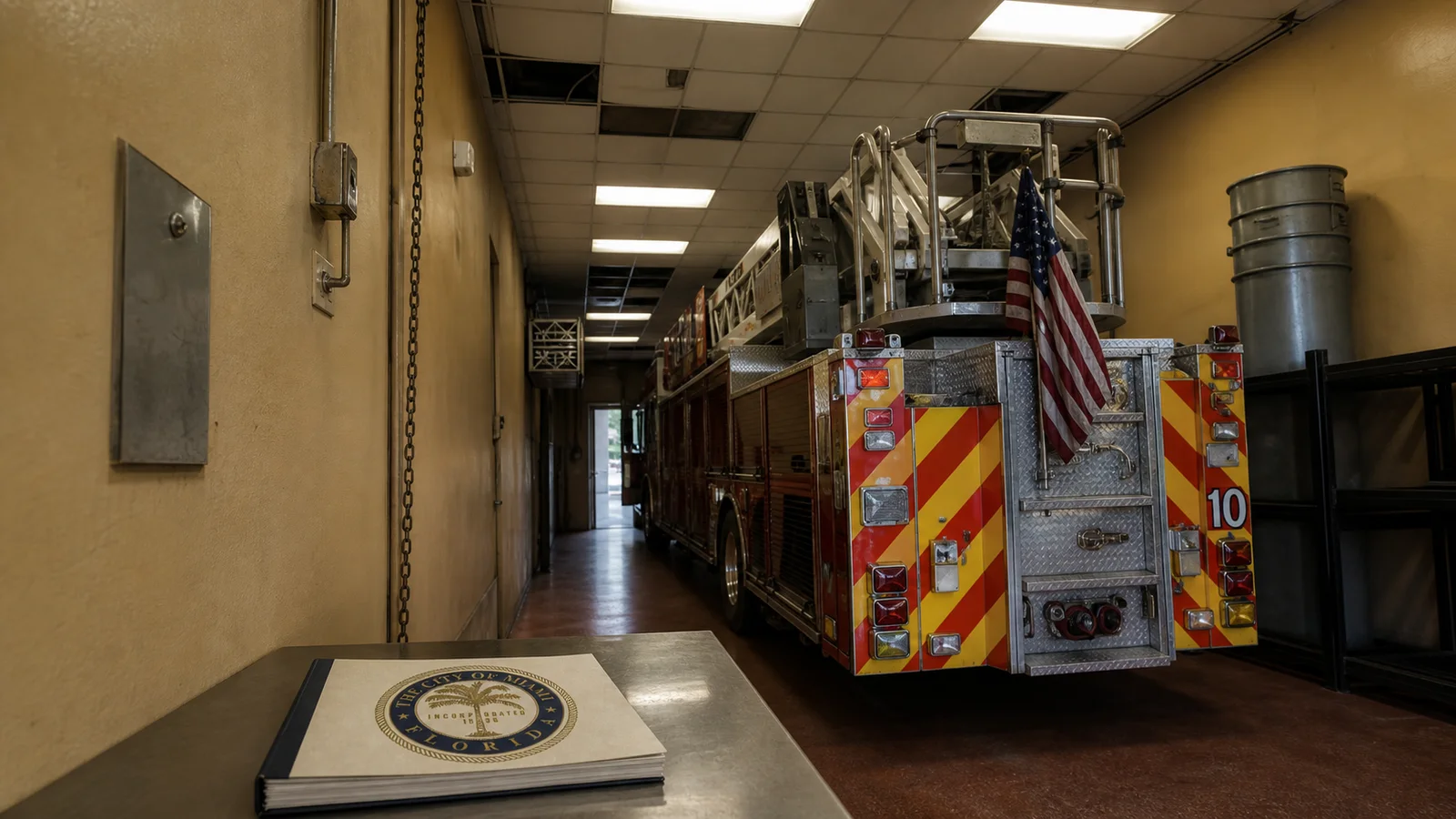
Eight of Miami’s 17 fire-rescue stations are more than 50 years old, according to the city, and two are more than 60 years old. Some bays cannot fit modern emergency vehicles. The project list includes four new stations, replacements for Stations 1 and 10, a major renovation of Station 3 and Fire-Rescue headquarters, and targeted work at other facilities.
The latest city breakdown assigns $300 million to the new public-safety building and $150 million to fire facilities. The bond resolution caps the capital-project debt millage at the current 0.5935 mills, and officials say the plan would not raise that rate. That wording does not mean the bond is free: it means the city proposes keeping the rate at or below the existing cap while dedicating property-tax revenue to debt repayment.
Oversight is promised, but voters need specifics
The ballot measure requires an independent annual audit. The city also promises a public dashboard, quarterly expenditure reports and project-level budget tracking. A separate charter proposal considered by commissioners would create an advisory general-obligation-bond oversight committee with public reporting duties.
Those safeguards could improve visibility after money starts moving. They do not replace the need for a baseline before the vote. An audit can confirm how funds were spent; it cannot tell voters whether they knowingly accepted the full repayment range or the operating commitments when they cast their ballots.
Before November 3, the city should publish four items in one place:
- A debt-service schedule showing principal, interest, issuance costs and total repayment under multiple rate scenarios.
- A project-level budget with contingencies, land costs and the sources and timing of expected offsets.
- A staffing and operating plan for every new facility, including the annual General Fund impact.
- A plain-language explanation reconciling the earlier $131 annual household estimate with the current $110.40 figure.
Bottom line
Miami’s deteriorating police and fire facilities present a legitimate public-safety problem. The city may conclude that long-term borrowing is the fastest and least expensive way to fix it. But “no increase to the current debt millage rate” is not the same as “no cost,” and $450 million is not the same as the projected amount repaid.
Voters should not have to choose between supporting first responders and demanding complete financial disclosure. Before Miami asks for permission to borrow nearly half a billion dollars, it should put the estimated $795 million repayment, the operating bill and the assumptions behind both on the same page as the campaign promise.


