
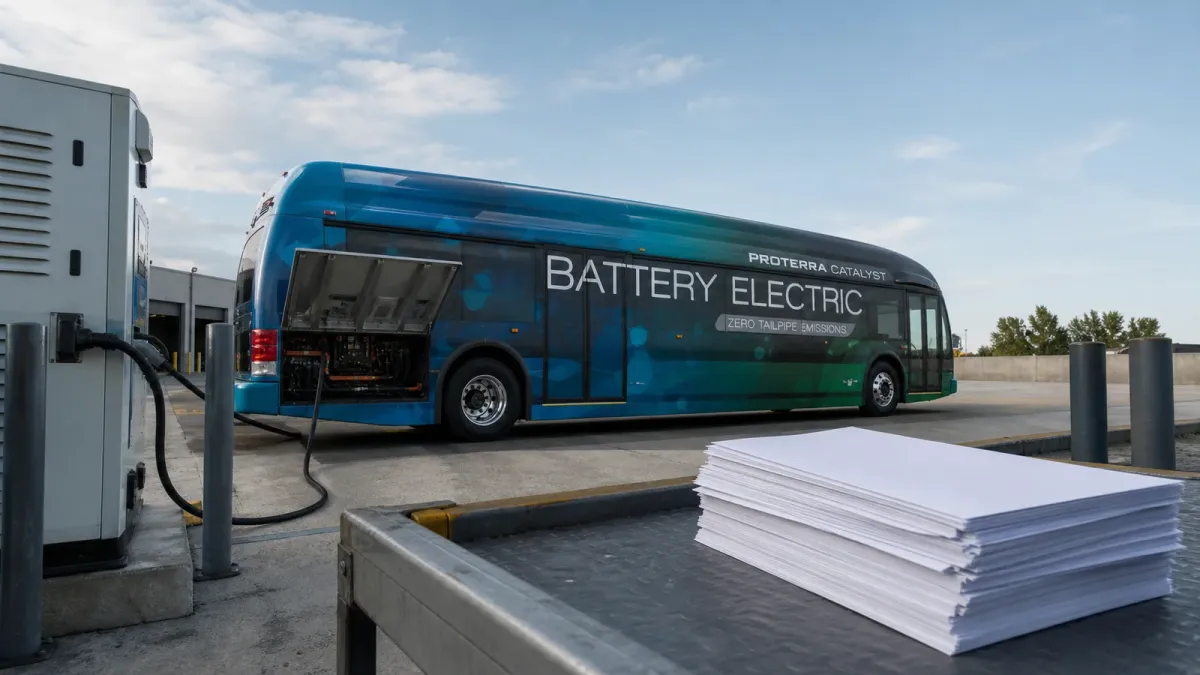
Miami-Dade's troubled Proterra electric bus fleet is back in front of County Hall after a county report placed the issue on the July 21 commission agenda and local reporting renewed the question of whether the buses can be salvaged, sold or replaced without forcing taxpayers to give back grant money.
The short version for riders and taxpayers: the county accepted 69 Proterra 40-foot battery-electric buses, but the fleet remains largely unavailable because of warranty, parts and manufacturer-support problems. Miami-Dade says it has already terminated Phoenix Motor, the company that took over Proterra's transit business after bankruptcy, and is still pursuing legal and financial remedies.
The report matters now because Miami-Dade has asked the Federal Transit Administration for more flexibility over what it can do with the fleet. The county says the FTA has already granted a spare-ratio waiver, meaning the Proterra buses are not counted against the normal in-service standard, but further waivers remain pending.
What changed
Miami-Dade's official report, listed as file 260697, was marked “Before the Board” with agenda item 2B6 for July 21, 2026. It traces the contract back to an October 2019 award for up to 75 Proterra buses and charging infrastructure, followed by Proterra's August 2023 bankruptcy and a 2024 reassignment of the contract to Phoenix.
The county says performance problems continued after the assignment and that Phoenix was terminated in April 2026. The report says the Department of Transportation and Public Works is working with the County Attorney's Office on legal action and will continue exploring remedies tied to the fleet's failed performance.
Local 10 reported in June that Miami-Dade was seeking federal approval to replace the buses early, citing about $61.8 million spent on 69 buses and related charging infrastructure, including federal, state and local surtax funding. WLRN, republishing Miami Herald reporting, said the broader Miami-Dade and Broward Proterra contracts totaled $126 million and that Miami-Dade's electric-bus setback left only a small share of the fleet operating as of spring.
Why Miami riders should care
The issue is not just whether the county bought the wrong buses. It affects how Miami-Dade accounts for bus availability, how quickly it can restore service capacity and whether it can avoid repaying federal money if the vehicles are disposed of or replaced before their expected useful life.
The county is also trying to separate the Proterra failure from its wider electrification strategy. The same report says Miami-Dade's newer New Flyer 60-foot electric buses are performing better on the South Dade Transitway, while the Proterra 40-foot fleet remains the costly exception that has limited projected operating savings.
What happens next
The practical decision point is federal. If further FTA waivers come through, Miami-Dade could gain more room to retire, sell, repurpose or replace buses without triggering repayment penalties. If they do not, the county may have fewer low-cost options while it continues legal and repair strategies.
For now, the county has not announced a final disposition plan. That leaves Miami-Dade with a local transit problem that is both operational and financial: dozens of vehicles bought for cleaner service remain tied up while officials try to recover value from a fleet that has not delivered what the contract promised.


