
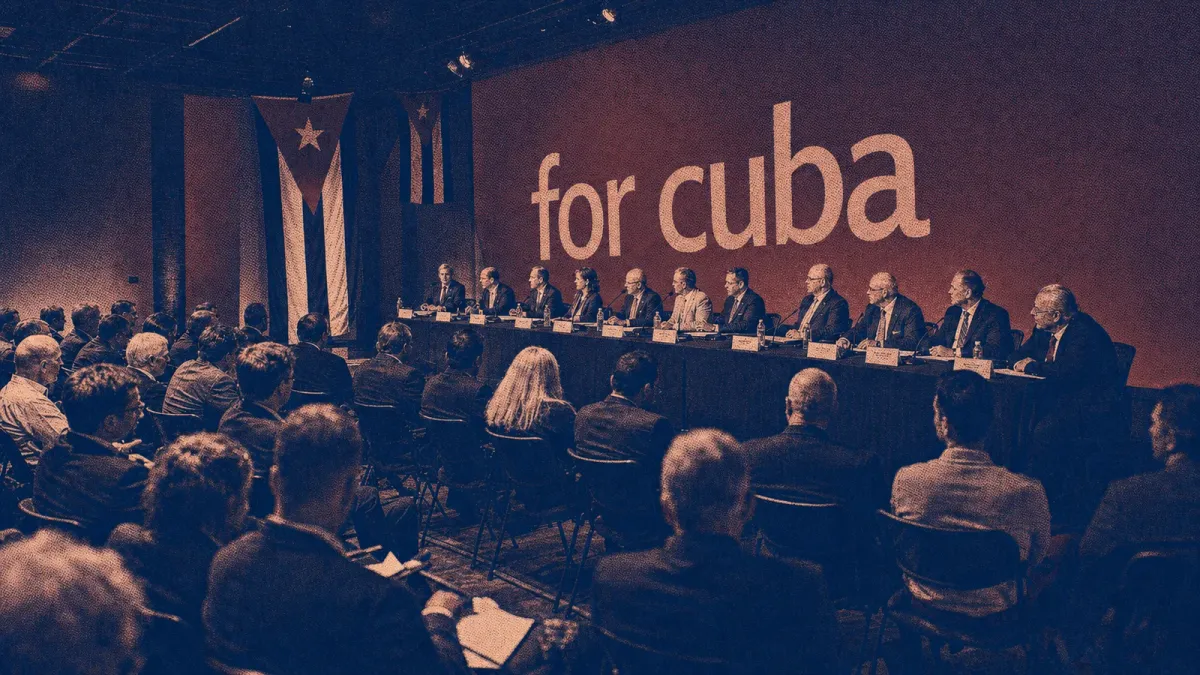
MIAMI — A panel of academics, engineers and Cuban American civic leaders met at the American Museum of the Cuban Diaspora on July 22 to outline how essential services and major industries could be rebuilt if Cuba enters a democratic transition.
The discussion focused on practical infrastructure questions rather than a timetable for political change. Local reports said participants examined maritime transportation, tourism, water and sewer systems, and energy expertise that could be needed after a transition.
The gathering was a planning forum, not an announced public-works program. Its proposals depend on a political change that has not occurred, and speakers were approaching the question from Miami's exile and democracy-advocacy community.
What the Miami forum examined
Attorney Marcell Felipe, chairman of the museum and founder of the Inspire America Foundation, welcomed the panel for a program titled “Rebuilding Cuba's infrastructure as part of the transition to Democracy,” according to WPLG Local 10.
Participants included Sebastián Arcos of Florida International University's Institute for Cuban Studies; Helena Solo-Gabriele, an engineer and professor at the University of Miami; and Jorge Piñón of the University of Texas at Austin's Energy Institute.
Univision Miami reported that the proposals spanned several systems that would have to work together. Reliable water and wastewater service would affect public health and housing. Maritime transportation would shape the movement of goods and people. Tourism could produce revenue, but it would also depend on power, water, ports and other basic services.
The panel did not produce a binding budget, construction schedule or government commitment. The immediate result was a public list of problems for specialists to study before any transition creates pressure for rapid decisions.
Why the discussion is local
Cuba policy and reconstruction planning have a direct civic presence in Miami-Dade, home to a large Cuban American community and organizations that have spent decades debating the island's future.
That connection was visible in June, when the Miami-Dade County Commission endorsed the principles of a separate 13-pillar “Roadmap for a Free Cuba” developed by the Miami-based Cuban American National Foundation. The county resolution addressed rule of law, infrastructure, education, health care and economic freedom. The July 22 museum forum was a separate event, but it reflected the same local push to prepare detailed proposals before a possible transition.
What happens next
Univision reported that organizers expect another meeting in the coming weeks on health, education and children. Those discussions could add social-service priorities to the infrastructure agenda.
For now, the central question remains unresolved: how to turn expert proposals into coordinated policy if political conditions on the island change. Any workable plan would still need legitimate Cuban participation, financing, property and regulatory rules, and decisions about which systems require the fastest repairs.


