
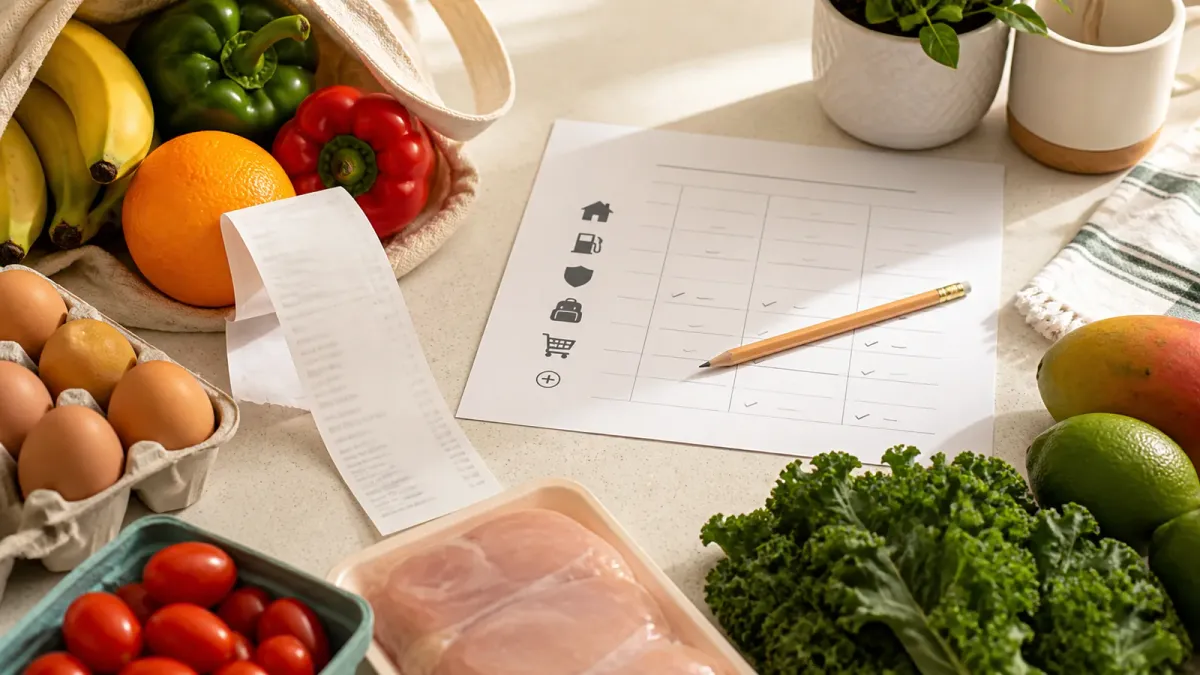
Miami's affordability story is no longer only about rent. A new local report highlighted by the Miami Herald on Thursday, August 13, says 86% of Miamians name groceries as a top budget strain, putting food costs into the same daily-stress conversation as housing, insurance and transportation.
The finding matters because grocery prices are not an occasional bill. They are a repeated household test: every cart, receipt and substitution forces families to decide what can stay on the list and what has to wait.
The local signal lines up with a national McKinsey Institute for Economic Mobility survey of 30,119 U.S. adults, fielded from April 1 to April 13, 2026, that found nearly nine in ten respondents cited groceries and food as a top cost concern. McKinsey said rising living costs were the most common barrier people named when asked what stands in the way of getting ahead.
What changed
The Miami Herald framed the new McKinsey data as a Miami-metro affordability warning, reporting that residents are grappling with everyday costs and hoping to earn more money. That local angle is important: a national food-price concern becomes more consequential in a market where housing, property insurance, transportation and childcare already leave many households with less room to absorb another recurring increase.
The freshest local price data do not show groceries easing enough to erase that pressure. The U.S. Bureau of Labor Statistics said the Miami-Fort Lauderdale-West Palm Beach food-at-home index rose 2.4% from April to June and 2.9% over the 12 months ending in June. Meat, poultry, fish and eggs were up 7.7% over the year, while fruits and vegetables rose 3.1%.

Those numbers do not mean every grocery item moved in the same direction. BLS also reported that dairy and related products fell 6.0% over the same 12-month span. But the broader pattern still leaves shoppers facing a mixed shelf: some prices ease, others rise sharply, and the total cart remains hard to predict.
Why it matters in Miami
Miami's cost-of-living squeeze has become a local economic issue, not just a household complaint. Business Insider reported this week that Miami's higher costs are affecting whether workers and families stay in the region, with rising rents and insurance costs adding pressure to basic expenses. Grocery strain adds another layer because it hits every income group frequently, including people who may not move but do change where they shop, what they buy and how much they save.
McKinsey's report helps explain why groceries feel so politically and economically loud. People encounter food prices constantly. A family may see rent once a month, but it sees grocery prices several times a week, and the comparison happens in real time: eggs, meat, produce, school snacks, lunch supplies and household staples.
That frequency can make food inflation feel larger than a headline CPI number. For Miami households, the practical question is not whether the regional food index is up 2.9% over a year. It is whether the weekly cart still fits after rent, fuel, insurance, utilities and back-to-school costs are paid.
The pressure also lands at a difficult point in the calendar. Miami-Dade families are starting the school year, many renters are watching lease renewals, and employers are trying to understand whether paychecks still match the cost of staying in the county. In that setting, grocery strain becomes a retention signal as much as a consumer story.
What to watch next
The next Miami-area CPI release is scheduled for Friday, September 11, and will show whether the summer food-at-home increase continued into August. That report will matter for grocers, restaurants, school families and local employers trying to read how much wage pressure remains in the market. Local hiring, restaurant menu pricing and school-year household spending will all help show whether the pressure is easing or spreading.
For readers, the immediate takeaway is narrower but useful: compare receipts over the same stores and categories, not just one expensive trip. If meat, eggs or produce are driving the increase, switching stores may help less than changing the mix of meals for a few weeks. If staples are rising across the board, the strain is less about shopping skill and more about a local affordability market with too little margin.


