
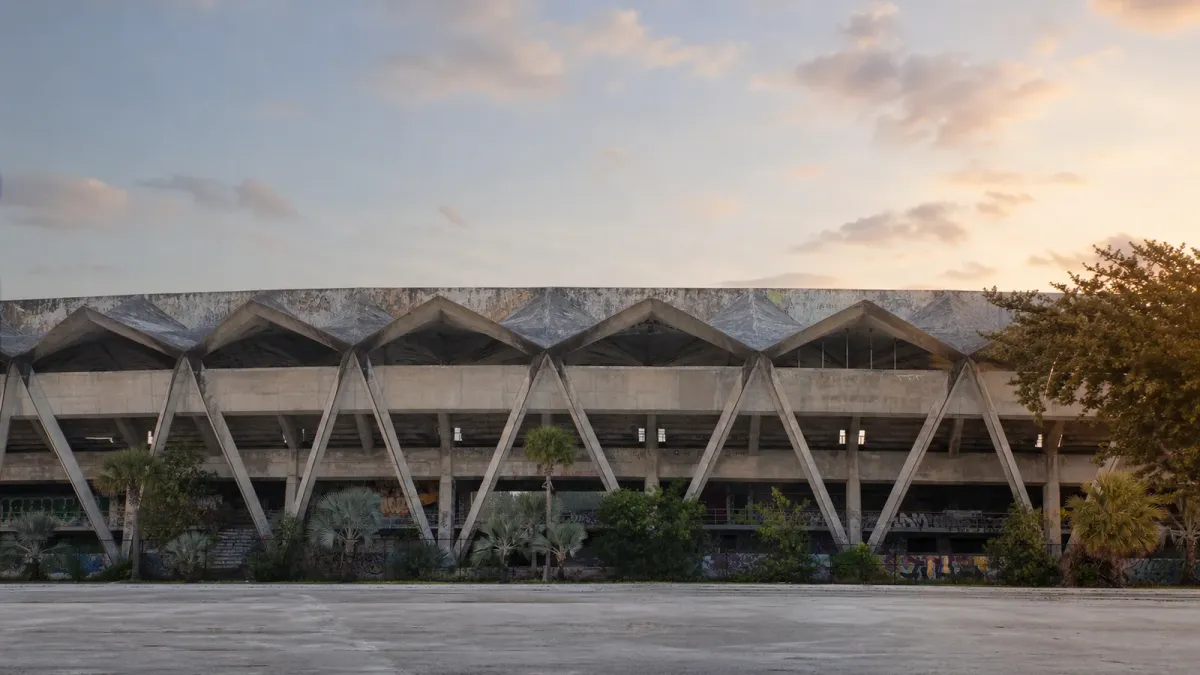
Miami voters approved a 40-year management agreement intended to move the long-stalled restoration of Miami Marine Stadium forward. Preliminary Miami-Dade election results posted early Wednesday, August 19, show the measure passing with 22,505 votes, or 68.56%, while 10,319 voters opposed it.
All 139 participating precincts were reporting, though the totals remain unofficial until the canvassing board reviews provisional ballots and cure affidavits and certifies the election. The result gives the City of Miami authority to enter an agreement with Global Spectrum L.P. to manage events at the stadium property and adjacent Flex Park on Virginia Key.
The vote is a major turn for a waterfront landmark that has been closed since 1992. It does not mean the stadium is ready to reopen: the total restoration cost, complete financing plan, construction schedule and reopening date have not been finalized.
What voters approved
The official ballot language sets four headline terms. The city would receive 93% of gross event sales after a $33,333 monthly management fee is deducted, receive 85% of sponsorship revenue, enter a 40-year term and receive up to $10 million from Global Spectrum toward restoration.
Global Spectrum is affiliated with Oak View Group, a major venue operator. The proposed operating model begins with activity at the Flex Park, with event revenue intended to support the broader effort to finance repairs and upgrades at the stadium.
Why the decision matters
Designed by Cuban-born architect Hilario Candela and opened in 1963, Miami Marine Stadium became known for powerboat racing, concerts on a floating stage and community gatherings. The 6,500-seat structure has been listed on the National Register of Historic Places since 2018, but repeated revival attempts have failed to return it to regular public use.
The approval settles the immediate ballot question, not every dispute around the project. Supporters see a viable route to preserve a singular piece of Miami architecture while keeping the property in city ownership. Residents and preservation advocates have also raised questions about traffic, event noise, nearby wildlife and whether future revenue will cover the full cost without exposing the public to additional financial risk.
What is still undecided
The most important missing number is the final project price. The Associated Press reported before the vote that the total cost had not been determined. Any later financing and construction plan will need to show how the operator's contribution, event revenue and other funding sources fit together.
The city must also turn the ballot authorization into a detailed, enforceable agreement. Residents should watch for the final operating terms, performance benchmarks, public-access commitments, traffic and environmental plans, and the sequence of approvals required before major work begins.
What happens next
The preliminary election results will proceed through Miami-Dade's canvassing and certification process. After that, attention shifts to the city's execution of the management agreement and the operator's detailed plan for the Flex Park and stadium.
For Miami, the practical question is no longer whether voters will authorize the partnership. It is whether the city and Global Spectrum can convert that authorization into a transparent, fully financed restoration that reopens the landmark without losing public control of the site.


