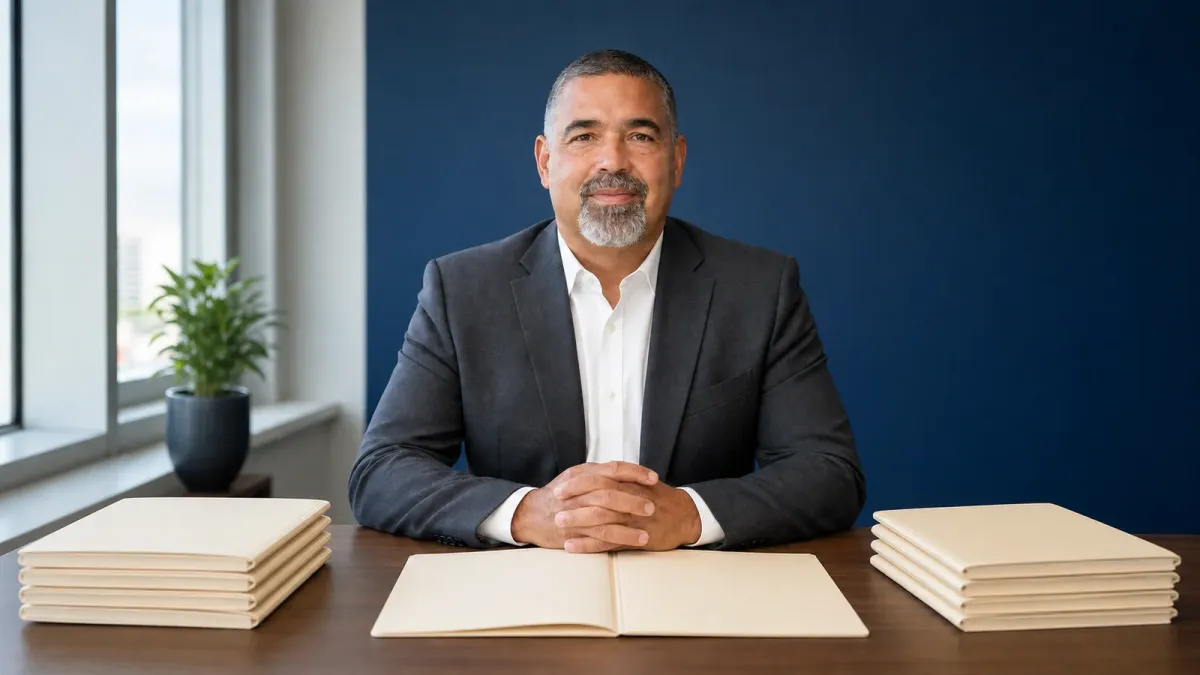
Rafael Villalobos, the South Region superintendent for Miami-Dade County Public Schools, appeared on every sitting school board member's semifinalist list as the district prepares to narrow its search for a new superintendent.
Emails and memos obtained through a public-records request show that all eight current board members selected Villalobos to advance, the Miami Herald reported on July 20. The District 1 seat is vacant, leaving eight members participating in this stage. No other candidate received support from every member.
The result gives Villalobos the broadest support at the semifinalist stage, but it is not a final vote or an appointment. Board members are scheduled to meet July 21 to consider finalists, public interviews and the remaining timeline.
What changed
Board members could submit up to three names from the 21 applicants. Six candidates emerged as semifinalists:
- Jose Bueno, chief of staff to Superintendent Jose Dotres.
- Ernie Lozano, Broward County Public Schools' chief human resources officer.
- Sylvia Mitchell, a former Miami charter-school principal and Texas education executive.
- Carlos Perez, a West Palm Beach charter-school principal.
- Christopher Ruszkowski, a former New Mexico education secretary.
- Rafael Villalobos, Miami-Dade's South Region superintendent.
Villalobos received eight selections. Bueno received four. Lozano received three, Ruszkowski two, and Mitchell and Perez one each. Only four semifinalists appeared on more than one member's list.
Villalobos has led the district's South Region since 2022 and previously spent more than a decade as a principal. District records and official communications identify him as the administrator overseeing schools in the South Region, giving board members a long local record to examine.
Why it matters
The next superintendent will lead one of the country's largest public-school systems through a period of enrollment and budget pressure. Traditional public-school enrollment has been declining as charter schools and state-supported private-school vouchers expand, and the board has approved school closures and consolidations ahead of the coming academic year.
The job also carries responsibility for a budget exceeding $7 billion, a workforce that makes the district one of Miami-Dade's largest employers and a large portfolio of public property. The selection therefore affects students and employees, but also neighborhood planning, transportation, construction and local public finances.
Broad semifinalist support matters because it shows that Villalobos cleared different members' initial screens. It may signal confidence in his district experience and familiarity with South Florida. It does not show how members will weigh public interviews, background materials, proposed priorities or contract terms when they make a final choice.
The vote pattern also reveals that the board did not enter the process with one uniform slate. Members paired Villalobos with different candidates and professional backgrounds, from district administration and human resources to charter-school leadership and state education policy. That makes the upcoming finalist discussion a comparison of governing approaches, not simply a confirmation of the early front-runner.
The selection process
The board adopted an eight-phase search framework in May. The process included community input, national recruitment, eligibility screening, reference checks and individual board-member selections. The current phase covers initial interviews and creation of a finalist list.
A district analysis initially found that eight of the 21 applicants met every listed minimum qualification. The final semifinalist group includes four of those eight plus two candidates who advanced after additional review. Background checks were scheduled for completion before the July 21 meeting.
Current Superintendent Jose Dotres was appointed in January 2022 after Alberto Carvalho left for Los Angeles. Dotres' contract runs through February 14, 2027, but the board's published framework calls for naming a successor by August 13, 2026, allowing time for transition and onboarding.
What happens next
At the July 21 special meeting, members can decide which semifinalists become finalists and set dates for public interviews and the final selection. The meeting is also a point for public input under the board's adopted search framework.
Residents evaluating the candidates should watch for more than vote totals. The most useful comparisons will be each candidate's plan for declining enrollment, school consolidation, teacher recruitment and retention, academic performance, capital assets and trust with families.
Villalobos enters the meeting with the clearest initial consensus. The decisive tests still lie ahead: public questioning, finalist deliberations and the formal board vote that determines who will run Miami-Dade County Public Schools.


